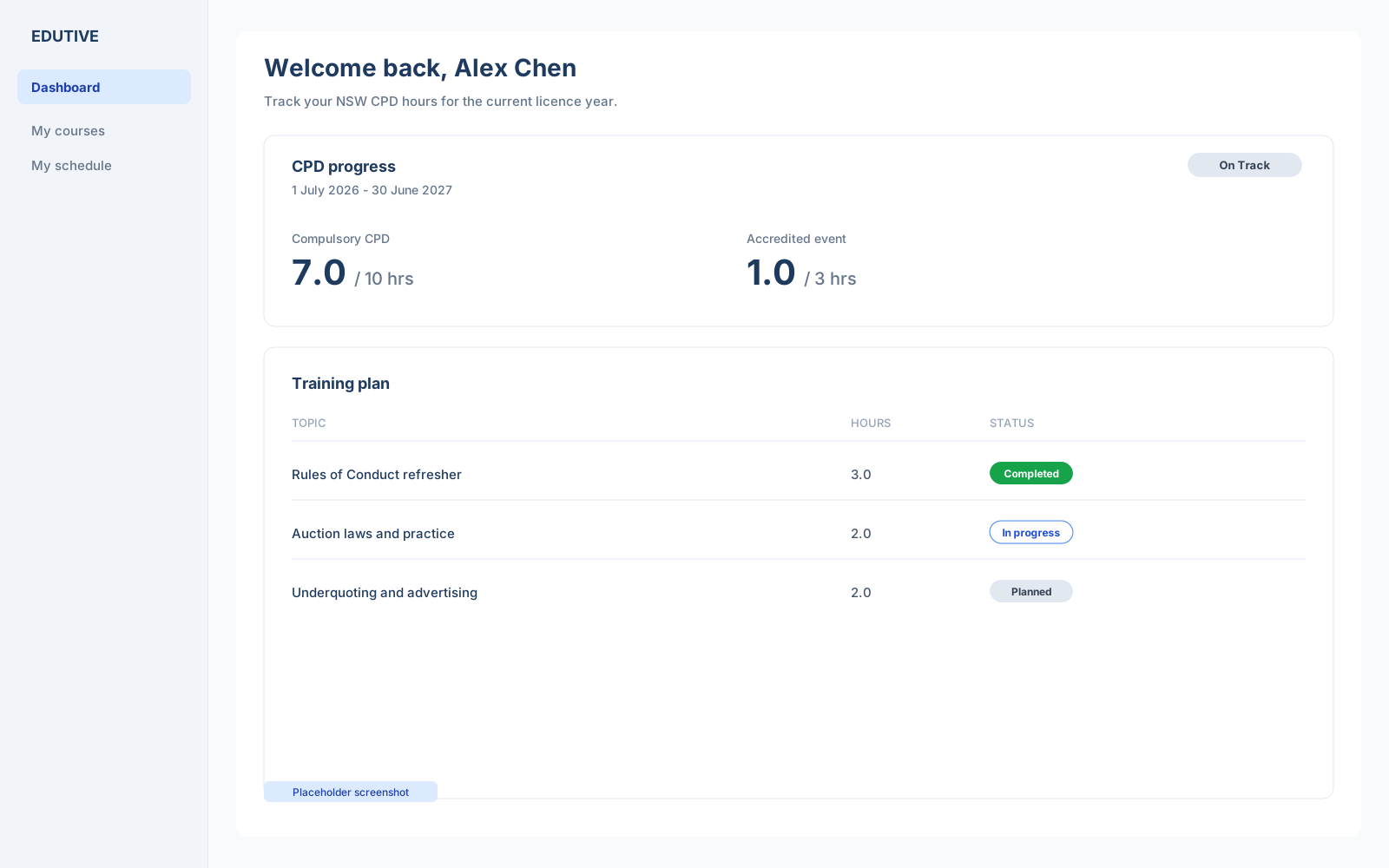


For the 2026–2027 NSW CPD year (1 July 2026 to 30 June 2027), Rules of Conduct refresher is a published compulsory interactive topic for residential real estate salespeople and commercial real estate agents. Inside that topic, disclosure and material facts are where many day-to-day campaigns either stay compliant — or drift into omission, half-truths, and unsupported claims under commercial pressure.
This article is a public explainer of how those disclosure / material-facts CPD themes show up in practice. It goes deeper than our Rules of Conduct refresher overview on the three broad conduct themes. It summarises published Fair Trading CPD guidance and common professional-conduct principles drawn from approved Rules of Conduct learning. It is not legal advice, and it does not replace reading the official rules or completing your compulsory training.
According to the NSW Government CPD page (last updated 9 July 2026 at the time of writing), compulsory topics must be delivered by an approved provider in an interactive environment (face-to-face, maximum 40 attendees, or interactive webinar, maximum 25 attendees) and must include an assessment activity.
Who this disclosure deep-dive applies to in 2026–2027
Fair Trading lists Rules of Conduct refresher among the compulsory topics for:
- Residential real estate salespeople — minimum 7 hours covering 4 compulsory topics
- Commercial real estate agents — minimum 7 hours covering 4 compulsory topics
It does not appear on the published compulsory lists for buyers agents, business brokers, stock and station agents, onsite short-term residential property managers, or strata managing agents. Those pathways have different topic sets. Residential property managers have their own compulsory topic list on the Fair Trading CPD page.
If you hold multiple licence categories or work across several areas of practice, cover the compulsory topics for each relevant pathway. Shared topics generally do not need to be repeated if all required learning outcomes are met. See our multiple areas and dual-licences guide and the 2026–2027 CPD requirements overview.
Compulsory Rules of Conduct learning must still come from a training provider approved by the Strata and Property Services Commissioner. EDUTIVE (Edutive Pty Ltd) is listed among the organisations approved to deliver compulsory learning topics between 1 July 2026 and 30 June 2027.
Disclosure is not a courtesy add-on
Conduct training treats disclosure as part of the occupational framework — not a soft skill. Practical themes that commonly arise include:
- Acting honestly, fairly and professionally with all parties in the transaction
- Avoiding misleading or deceptive statements, half-truths, or silence that makes an existing claim misleading
- Separating verified fact, client-supplied information, and opinion
- Embedding inquiry, substantiation, correction, and record-keeping into listing systems so disclosure is not improvised at exchange
Vendor pressure cannot override disclosure that the law requires. Confidentiality protects client information, but it does not authorise a false claim, misleading silence, or non-disclosure where disclosure is permitted or compelled by law. If a campaign cannot proceed lawfully, escalate to the Licensee in Charge and pause rather than “softening” the copy.
Two lanes: prescribed facts vs contextual information
Public Rules of Conduct explainers commonly distinguish two lanes. Blending them is a frequent source of risk.
Lane 1 — prescribed kinds of material facts
Some facts attract a positive disclosure duty: if the agent knows or ought reasonably to know that a prescribed kind of material fact applies, failing to disclose it when inducing a contract or arrangement can breach agency law — whether or not the omission was intended. The purchaser need not ask first.
Prescribed categories taught in Rules of Conduct training commonly include (in summary):
- Flooding from a natural weather event, or bush fire, affecting the property within the last five years
- Significant health or safety risks
- Listing on the statutory register of residential premises containing loose-fill asbestos insulation
- Murder or manslaughter at the property within the last five years
- Manufacture, cultivation, or supply of a prohibited drug or plant at the property within the last two years
- External combustible cladding issues tied to specified notices or orders requiring rectification
- A development or complying-development application lodged for cladding rectification
- Certain building work rectification, prohibition, or stop-work orders under the residential apartment buildings compliance framework
Agents should make reasonable inquiries — at least appropriate questions of the owner, and use of records and sources reasonably available to the agency. “Ought reasonably to know” is not limited to what someone remembers being told in a hallway conversation.
Lane 2 — other important information
Not every fact that could affect value, use, or price is prescribed. Other information is assessed contextually under honesty / fairness standards and misleading-conduct rules — including what has been advertised, what the agent has said, what the buyer asked, what is not readily apparent, and the overall impression created.
Examples of Lane 2 pressure points in sales practice:
- Advertising “secure income” while knowing a major commercial tenant is leaving
- Leaving an earlier land-size or zoning claim uncorrected after better information arrives
- Giving an evasive answer to a direct purchaser question
- Passing on a vendor claim as verified fact when it has not been checked
Attribution (“the vendor advises…”) may identify a source. Attribution alone does not cure an unsupported claim.
Common risk patterns: omission, partial disclosure, misleading conduct
Most disclosure failures are not elaborate fabrications. CPD themes group the practical risks as:
- Omission — failing to disclose a prescribed fact the agent knows or ought to know; or silence that makes the overall campaign misleading
- Partial disclosure — telling part of the truth so the incomplete picture still leads a reasonable person into error
- Misleading conduct — false certainty, unfounded predictions, or a wrong overall impression across ads, inspections, and negotiations
Commercial pressure concentrates risk where:
- A vendor says “don’t mention that”
- Campaign momentum makes staff reluctant to correct live advertising
- Teams assume “due diligence will catch it”
- Different staff give different answers
- There is no structured owner questionnaire, so the agency never learns facts it ought to know
A purchaser’s later due diligence does not automatically cure earlier misleading marketing. Incomplete documents create a separate conduct risk: material particulars should be in place before signature, and the signatory should receive a copy immediately after signing.
Timing: “serious interest” is guidance, not a safe harbour
Fair Trading guidance that sensitive information may appropriately be revealed when someone is seriously considering purchase is contextual timing guidance. It is not a defined safe harbour.
Practical checkpoints taught in disclosure CPD:
- Disclose before the relevant bid, offer, or contractual commitment
- Disclose earlier where an advertisement or statement would otherwise mislead
- Answer direct questions frankly — do not defer a known answer until exchange paperwork is ready
- Record significant disclosures (content, recipient, date, method)
Disclosure immediately before exchange is not always enough if an auction bidder or private-treaty offeror has already acted on earlier conduct.
How teams keep disclosure usable after the course
Completing the compulsory topic helps with renewal. Agencies still need the learning to return to supervised practice:
- Put Rules of Conduct refresher on the agency training plan where relevant staff are on a pathway that requires it — Licensees-in-charge must have all CPD training detailed in that plan
- Use listing questionnaires, documentary checks, and claim-substantiation records
- Correct advertisements, scripts, and prior statements consistently when facts change
- Brief assistant agents within their authority limits and escalate reserved judgment calls
- Re-check the official CPD page if your area of practice changes mid-year
For how Licensees in Charge tie CPD into supervision habits, see our LIC supervision duties guide. For interactive delivery format rules, see What “interactive” CPD means for NSW property professionals.
How EDUTIVE can help
EDUTIVE is listed among organisations approved to deliver compulsory CPD learning topics for the 2026–2027 year on the NSW CPD page.
The Rules of Conduct refresher is one of the four topics in our CPD course for residential salespeople, taught in live webinars. Always confirm your obligations against your licence arrangements and the latest Fair Trading guidance.
Frequently asked questions
Is Rules of Conduct refresher compulsory for material-facts training in 2026–2027?
Rules of Conduct refresher is a published compulsory topic for residential real estate salespeople and commercial real estate agents. Disclosure and material-facts themes commonly sit inside that topic. Other pathways have different compulsory lists — always match training to your licence category and area of practice.
Do agents have to volunteer every fact a buyer might care about?
Not automatically. NSW agency practice distinguishes prescribed kinds of material facts that attract a positive disclosure duty from other information assessed contextually under honesty, fairness, and misleading-conduct standards. Completing CPD refreshes the framework; day-to-day judgment still depends on the facts of each campaign.
Does “serious interest” mean I can wait until just before exchange?
Fair Trading timing guidance about serious interest is contextual — not a safe harbour. Disclose before a relevant bid, offer, or commitment, and earlier where marketing would otherwise mislead or a direct question needs a frank answer.
Does completing Rules of Conduct CPD replace listing-system controls?
No. Interactive training helps you stay current on published learning outcomes, but inquiry checklists, claim substantiation, corrections, and disclosure records still need to live in supervised agency practice.
Sources
Primary references used for this article:
Confirm your obligations against your licence arrangements and the latest Fair Trading guidance before relying on this summary.
Sources
Next step
Complete your NSW CPD with EDUTIVE
EDUTIVE is an approved NSW Fair Trading CPD provider. Browse compulsory topics for your licence category, or track your hours with CPD Tracker.