

In NSW, Fair Trading’s supervision guidelines expect principal licensees and Licensees in Charge to properly supervise the property agency: people leadership (so no part of the business is left unsupervised), operational procedures for legal compliance, and monitoring of business conduct with records of corrective action.
Nominated LICs (Class 1 in the relevant category) are also responsible for developing, implementing, reviewing, and updating the agency’s annual training plan, aligned to each CPD year from 1 July to 30 June. Fair Trading’s CPD guidance states that Licensees-in-charge must have all CPD training for the agency detailed on that plan. Completing your own CPD does not discharge those supervision duties.
This is a practice guide for day-to-day LIC habits — not a rewrite of the training-plan checklist, and not legal advice. Confirm obligations on the supervision guidelines, LIC role page, and CPD requirements page. For template fields, see NSW LIC training plan CPD. Holding Class 1 does not automatically mean you are the nominated LIC — see Class 1 vs Class 2.
What Fair Trading supervision guidelines expect of LICs
From the Licensee in charge — role and responsibilities page and the supervision guidelines overview:
- A property agency must appoint an LIC to supervise the business, or several LICs for different parts of the business.
- Licensees who run a business under the Property and Stock Agents Act must ensure that no part of the business is left unsupervised by an LIC.
- An LIC is responsible for the proper supervision of the business of which they are in charge and must hold a Class 1 licence in the relevant category.
- Principal licensees and LICs must properly supervise persons engaged in the business, establish operational procedures for legal compliance, and monitor business conduct — including recording non-compliance and corrective action.
- Nominated LICs develop, implement, review, and update the agency’s annual training plan, aligned to each CPD year.
The training plan is where CPD sits inside that supervision system.
How supervision links to CPD mid-year
Completing your own CPD does not discharge LIC supervision duties. Individual agents still keep their own CPD records. Your role is to keep the agency’s plan, pathways, and progress coherent as the year unfolds.
1. Know who you supervise and which pathways apply
Map every property and stock agent employed in the agency to their licence category and area(s) of practice. Pathways differ — residential salespeople, buyers agents, strata managing agents, and assistant agents (certificate of registration) are not interchangeable on the plan.
When someone joins, leaves, changes role, or adds an area of practice, update the plan promptly. Dual-pathway agents need planning for each relevant pathway.
2. Detail CPD on the agency training plan
Fair Trading expects all CPD training for the agency to appear on the training plan. That includes compulsory interactive topics from approved providers, and other development tied to performance goals.
Use the official training plan guide and template as a minimum guideline. For a practical checklist of fields to capture, see NSW LIC training plan CPD.
3. Monitor progress, not only enrolment
Supervision is weaker if the plan lists intended courses but never shows completions. Mid-year, check:
- Who has enrolled vs completed compulsory topics
- Whether interactive delivery matches Fair Trading’s published expectations for compulsory learning
- Where certificates or statements of attainment are stored
- External training completed outside your main provider (so the plan stays complete)
Treat unfinished or mismatched CPD as something to follow up — not ignore. That fits the guidelines’ monitoring mindset.
4. Connect training to how work is supervised
CPD is most useful when learning returns to the desk. After compulsory topics, ask what changes in checklists, file reviews, or handovers. Assistant agents should not operate beyond their authority while Certificate IV units or supervised experience catch up.
Common gaps LICs should watch for
- Own CPD done, team plan stale — personal renewal does not equal agency supervision.
- Generic one-page plan for every role — pathways and compulsory topics differ by licence and area of practice.
- Enrolments logged, completions not — progress and evidence matter when you review the plan.
- No owner for follow-ups — if an agent falls behind, someone needs to chase enrolments, evidence, or pathway changes.
- Forgetting assistant agents and dual pathways — certificate holders and multi-area practitioners need clear planning, not assumed coverage.
How this differs from the training-plan guide
The LIC training plan guide explains what to put in the document. This article is about day-to-day supervision habits: how LICs connect staff CPD progress to the plan and to proper supervision of the business. Start with the training-plan checklist if you need the template fields.
How EDUTIVE can help
EDUTIVE (Edutive Pty Ltd) is listed among organisations approved to deliver compulsory CPD learning topics for the 2026–2027 year on the NSW Fair Trading CPD page.
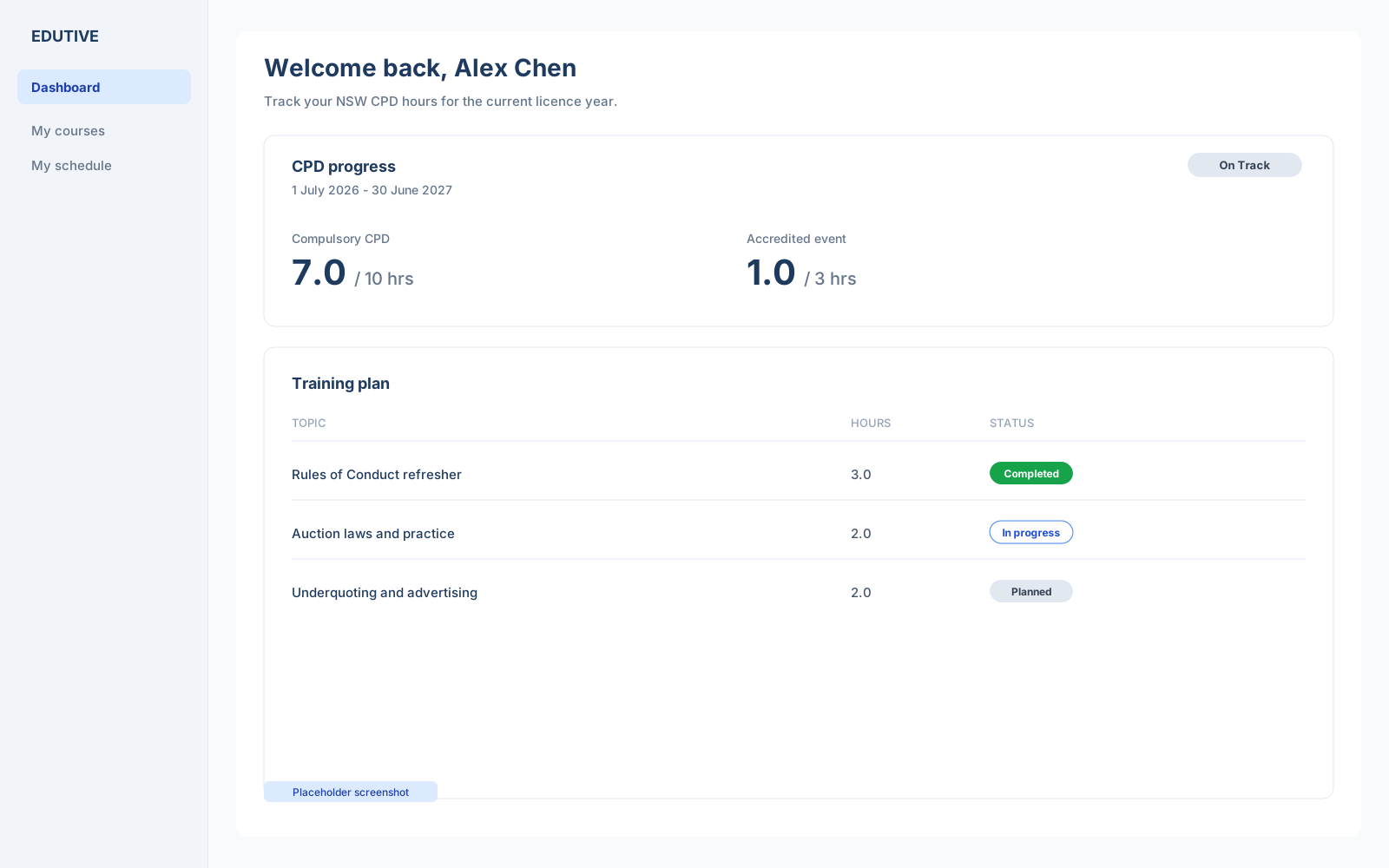
For LICs enrolled in a current CPD year EDUTIVE course, CPD Tracker supports agency-level visibility: per-agent plans, sync of EDUTIVE course activity, external training entries, and training-plan PDF export.
Browse interactive compulsory topics on the CPD course catalogue, then manage progress in Tracker. Always confirm obligations against your licence arrangements and the latest Fair Trading guidance.
Frequently asked questions
Is an annual training plan part of LIC supervision?
Yes. Fair Trading requires licensed agencies to prepare and maintain an annual training plan. Nominated Licensees in Charge are responsible for developing, implementing, reviewing, and updating it each year, aligned to the CPD year from 1 July.
Must CPD training appear on the agency training plan?
Yes. Fair Trading’s CPD guidance states that Licensees-in-charge must have all CPD training detailed in the training plan for the agency.
Does completing my own CPD satisfy LIC supervision duties?
No. Your personal CPD is separate from supervising others. LIC duties include ensuring no part of the business is left unsupervised and keeping the agency training plan current as staff complete CPD.
How is this different from a training-plan how-to guide?
A training-plan guide explains what to put in the document. This article focuses on day-to-day supervision habits. Start with the training plan checklist if you need the template fields.
What are the three supervision requirements in plain English?
Properly supervise people engaged in the business, establish operational procedures for legal compliance, and monitor business conduct — including recording non-compliance and corrective action.
Sources
- NSW Government — Licensee in charge: role and responsibilities
- NSW Government — Supervision guidelines for property agencies
- NSW Government — Continuing Professional Development (CPD) requirements
- NSW Government — Licensee-in-charge training plan guide and template
Next step
View CPD courses or open CPD Tracker. Keep the agency training plan and staff progress current through the year — that is part of LIC supervision, not only renewal paperwork.
Sources
Next step
Complete your NSW CPD with EDUTIVE
EDUTIVE is an approved NSW Fair Trading CPD provider. Browse compulsory topics for your licence category, or track your hours with CPD Tracker.