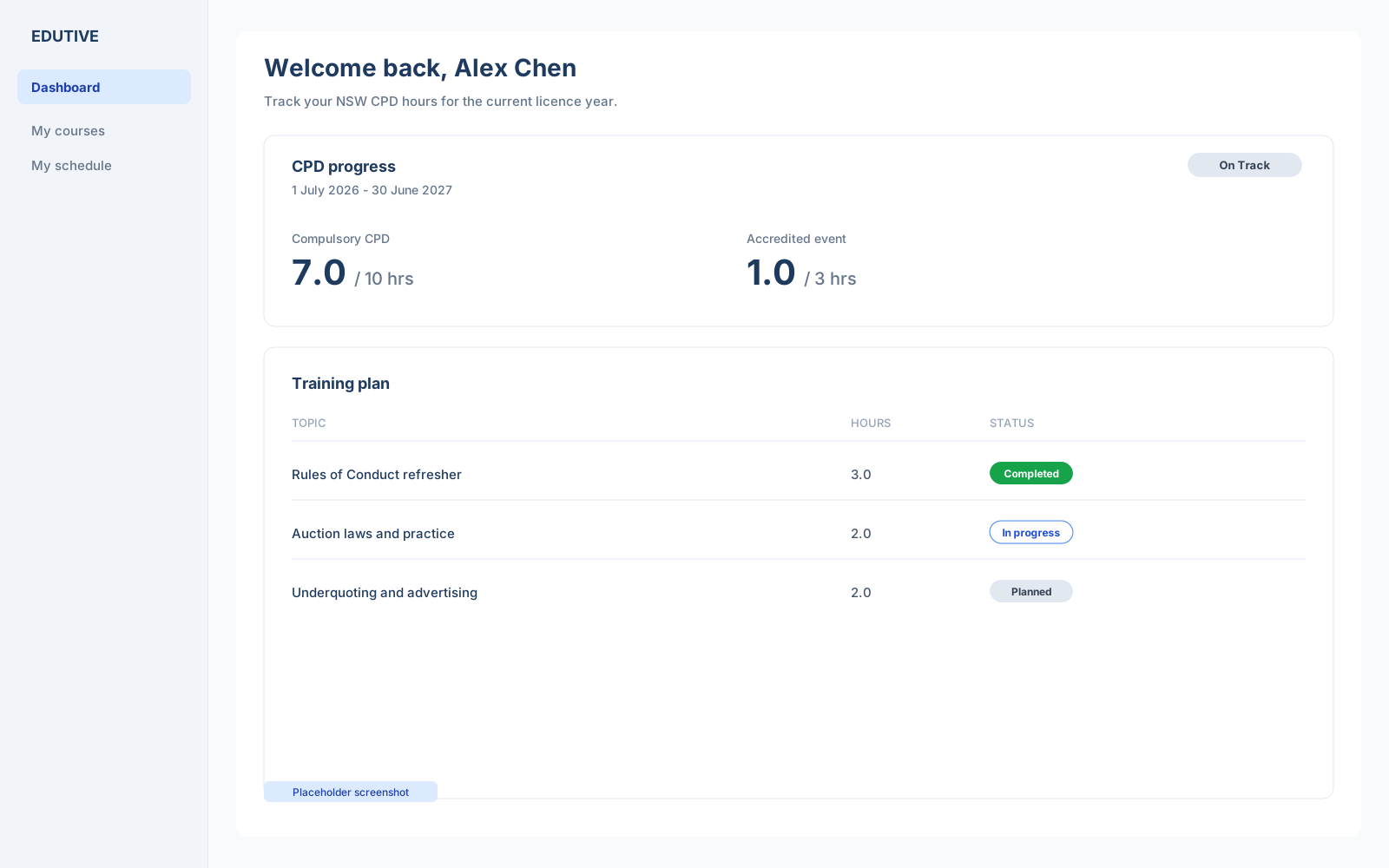


For the 2026–2027 NSW CPD year (1 July 2026 to 30 June 2027), completing compulsory learning is only half the job. Licence and certificate holders must also keep their own records of compulsory topics completed and be able to provide them to NSW Fair Trading if requested. Certificate of registration holders must keep the statement of attainment issued by a registered training organisation for each Certificate IV unit completed from the relevant pathway.
This guide focuses on making that evidence audit-ready: organised, complete, and findable before anyone asks. It complements — and does not replace — our practical guide on how to track NSW CPD hours. Confirm the latest rules on the NSW Government CPD page (last updated 9 July 2026 at the time of writing). This article is educational marketing content, not legal advice.
What “audit-ready” means in practice
Fair Trading’s published records rule is straightforward: keep your own records, and produce them if asked. Audit-ready means you can do that without rebuilding the year from email and memory.
In practice, that looks like:
- every completed compulsory topic has a matching evidence file
- each file is named and stored so you can find it by CPD year, pathway, and topic
- retention periods are respected (you still have last year’s evidence, not only this year’s)
- dual-licence or multi-area pathways are separated clearly enough that you can show what counted where
- if you are a Licensee in Charge, agency training-plan records align with what individuals can produce
A tidy hours tracker without certificates is not audit-ready. Certificates scattered across personal email with no index are not audit-ready either. You need both the index and the files.
What belongs in an evidence pack
Build a pack you could hand over (or securely share) without rewriting it under time pressure. For Class 1 and Class 2 pathways, each completed compulsory topic should usually include:
- Completion evidence from an approved provider (certificate or completion statement)
- Topic title matching the published compulsory topic name
- Provider name, completion date, and interactive hours claimed
- Delivery format noted (face-to-face or interactive webinar), because compulsory topics for Class 1 and Class 2 agents must be interactive from an approved provider
- A short note if the learning covers a shared topic across more than one licence category or area of practice
For certificate of registration holders, the core file is the statement of attainment for each relevant Certificate IV unit, kept with a clear unit code/title and completion date. Keep assistant-agent evidence in its own folder so it is never mixed with licensed-staff interactive-topic packs.
If you hold Class 1 extras that Fair Trading has said will be detailed further (accredited forum and, in relevant areas of practice, AUSTRAC AML training), keep a separate “pending / when published” section rather than inventing placeholders that look like completed compulsory topics.
A simple folder system that survives a request
Use a structure you can maintain all year. One reliable pattern:
CPD-evidence/
  2026-2027/
    class-2-residential-sales/
      01-topic-name-provider-YYYY-MM-DD.pdf
      02-topic-name-provider-YYYY-MM-DD.pdf
    certificate-of-registration/   # only if applicable
  2025-2026/                       # keep until retention ends
Naming tip: start with a sequence or date, then the published topic name, then the provider. Avoid “certificate-final-v3.pdf”. When dual pathways share a topic, store the evidence once and add a one-line notes.txt (or tracker field) that records which pathways it satisfies — do not invent a second completion.
Back up the folder. Phone screenshots and inbox search are fragile if Fair Trading asks months after a course ends.
Retention: keep more than the current CPD year
Published retention periods are clear:
- Class 1 and Class 2 licence holders: keep all records for 3 years
- Certificate of registration holders: keep all records for 4 years
Do not purge a finished CPD year in July just because a new year has started. Retention runs with the records themselves, and a request can arrive after the year closes. Carry-over of unused hours is generally not available (except assistant agents with additional Certificate IV units completed during the year), so early completion helps learning — but it does not shorten how long you should keep the evidence.
Individual holders vs agency / LIC packs
Fair Trading places responsibility on the licence or certificate holder to meet CPD requirements and keep their own records. That still matters if your agency pays for training or stores copies centrally.
Practical split:
- Individual holders keep a personal copy of every completion file and their own pathway index
- Licensees in Charge keep agency-level visibility that CPD for the team is detailed in the training plan, with evidence status for each agent
- Agencies can store shared copies, but should not be the only place an individual’s evidence lives
If someone leaves the agency mid-year, they still need their own records for the retention period that applies to them.
Quick readiness checklist (use before renewal season — or any request)
- List every licence category and area of practice you are completing against for 2026–2027.
- Confirm each published compulsory topic for those pathways has evidence attached (or a clear pending note where Fair Trading has not yet finalised detail — for example Residential Property Manager topics still being finalised).
- Open each evidence file and check the topic name, provider, date, and hours are readable.
- Confirm retention folders for prior years still exist (3 years for Class 1/2; 4 years for certificates of registration).
- Separate Certificate IV statements of attainment from Class 1 / Class 2 interactive-topic packs.
- Export or print a one-page year summary that points to file locations — useful if you need to respond quickly.
For the day-to-day habit of logging planned vs completed hours, use the CPD hours tracking guide. This checklist is the audit layer on top of that habit.
How EDUTIVE can help
EDUTIVE is listed among the organisations approved by the Strata and Property Services Commissioner to deliver compulsory CPD topics for the 2026–27 year (see the approved providers section on the NSW CPD page).
- Use CPD Tracker to keep planned and completed topics, evidence, and pathway context in one place — so a Fair Trading request is a retrieval task, not a reconstruction project.
- Browse interactive courses for your licence pathway on the CPD Course catalogue.
Confirm your exact obligations against your licence categories, areas of practice, and the latest Fair Trading guidance before you finalise a year pack or respond to a records request.
Frequently asked questions
What CPD evidence must I keep for NSW Fair Trading?
Licence and certificate holders must keep their own records of compulsory topics completed and provide them if Fair Trading requests. Certificate of registration holders must also keep the statement of attainment for each Certificate IV unit completed from the relevant qualification pathway.
How long must NSW CPD records be kept?
Class 1 and Class 2 licence holders must keep all records for 3 years. Certificate of registration holders must keep all records for 4 years.
Is a spreadsheet enough if Fair Trading asks for CPD records?
A log helps you find the right items quickly, but it is not a substitute for the underlying evidence — completion certificates, statements, or Certificate IV statements of attainment. Keep the files with the log so you can produce both if requested.
Who is responsible for CPD records — the agent or the agency?
Fair Trading places responsibility on the licence or certificate holder to meet CPD requirements and keep their own records. Agencies and Licensees in Charge still need training-plan visibility for staff, but individual holders should retain personal copies of their evidence.
Sources
Next step
Complete your NSW CPD with EDUTIVE
EDUTIVE is an approved NSW Fair Trading CPD provider. Browse compulsory topics for your licence category, or track your hours with CPD Tracker.